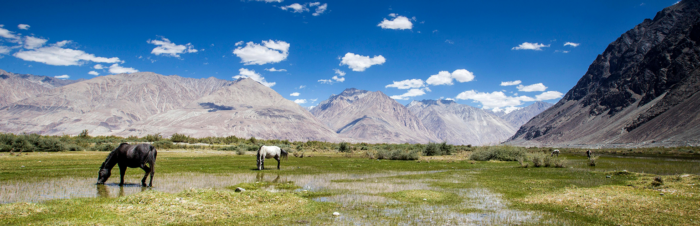
Nubra Valley – A Himalayan Oasis of Wonder
Known both as the Valley of Flowers and Ladakh’s Frozen Desert, Nubra Valley presents a dreamlike Himalayan panorama that leaves a lasting impression on every visitor. Reached after crossing the iconic Khardung La Pass, one of the highest motorable roads on Earth, the valley reveals a remarkable fusion of dramatic mountains, stark deserts, fertile riverbanks, and centuries-old monasteries—an environment that feels truly beyond imagination.
Hunder village forms the soul of Nubra, celebrated for its sweeping sand dunes and the rare double-humped Bactrian camels, living echoes of the historic Silk Route. Here, the striking contrast between rolling dunes and snow-draped peaks creates unforgettable scenery, while sunsets bathe the valley in warm hues of gold, amber, and rose, making it a paradise for photographers.
Dominating the landscape is Diskit Monastery, the oldest and largest in Nubra, gracefully positioned on a hilltop. Its towering 100-foot Maitreya Buddha gazes over the valley, offering a sense of calm and timeless spirituality. Surrounding villages such as Turtuk, Sumur, Panamik, and Kyagar provide glimpses into Baltistani heritage, apricot orchards, and age-old ways of life. Turtuk, especially, stands out for its distinctive culture, traditional cuisine, and heartfelt hospitality.
The gentle currents of the Shyok and Nubra rivers nourish the valley, transforming the desert into pockets of green life. For adventure lovers, Nubra offers camel safaris, ATV excursions, camping experiences, soothing hot springs, and endless opportunities to capture its ever-changing beauty.
Far beyond a scenic stop, Nubra Valley is an immersive journey where nature, culture, history, and adventure blend seamlessly. With its unique harmony of mountains, deserts, rivers, and monasteries, it promises a Himalayan escape filled with wonder and memories that endure long after the journey ends.